
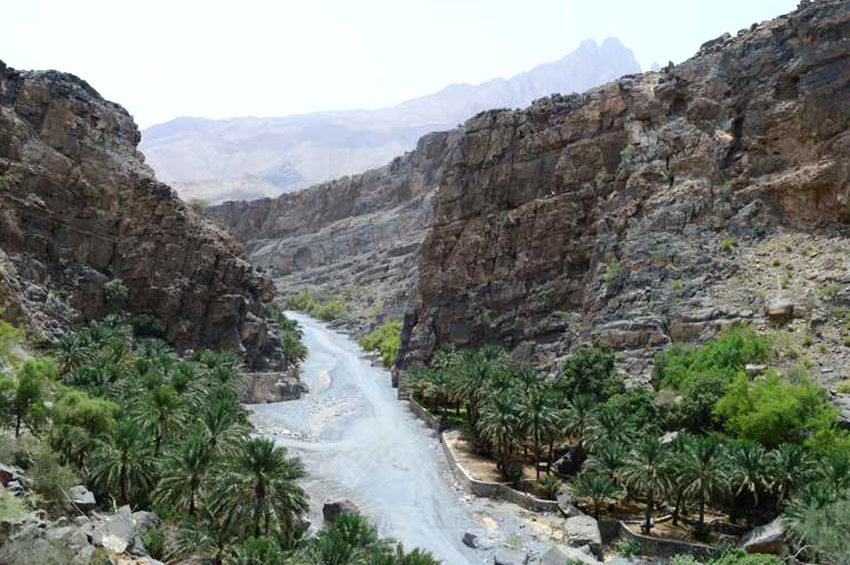
Toughened by weather and traversed by the Bedouin, the Al-Hajar Mountains in the northeast of Oman were formed millions of years ago by the rare geographical phenomenon of ‘obduction’ of the oceanic crust. The rocks were first formed beneath the surface of the ocean, and were then pushed up onto the land. The word ‘hajar’ means rock in Arabic and the Al-Hajar Mountains are nothing but solid rock—stark,
with not even a blade of grass on their surface.
Located at a height of 9,777 feet within these mountains is Jebel Shams, one of the most stunning canyons in the region, with their lush valleys, ancient villages and fruit orchards. About 240 km from the capital city of Muscat, summers are pleasant here and winters sometimes snowy, making it a popular retreat for those wanting to escape the extreme heat of the plains. The canyons offer the scope for a wide range of outdoor activities like trekking, rock climbing, canyoning, and off-road explorations
Stretching across Al-Hajar Mountains, Wadi Bani Awf, one of the largest valleys in Oman, is dotted with picturesque villages and ruins amid lush icy pools
It is also true that reaching Jebel Shams by an off-road drive in a four wheel-drive vehicle is in itself quite an adventure. Our driver-cum-guide Ahmed sports Prada sunglasses, six-pack abs—thanks to his Keto diet—and proudly wears his Bedouin heritage on his sleeve. The stomach-churning journey on the dirt roads through the canyons and hills is much fun, thanks to Ahmed’s continuous chatter that comes with a story with each twist of the road. Born and raised in these hills, Bedouins know every inch of Al-Hajar and they drive on its rough terrain with impeccable expertise. Dotted with picturesque villages, ruins of abandoned towns, and natural wonders, Wadi Bani Awf is one of the largest valleys in Oman, stretching through Al-Hajar. Filled with green, icy pools between rocks and gorges, each bend of the valley is more lush and beautiful than the other. We stop for lunch in a small valley filled with date palms, cool air and curious mountain goats trying to gatecrash our picnic. Wadi Bani Awf also leads to the famous Snake Gorge that cuts into the mountains. Known to be Oman’s largest natural water park, much of the gorge passes through pools. The valley is dotted with patches of grass, small fruit orchards, and clusters of date palms. Even apples are grown here, thanks to the freezing temperatures of winters.
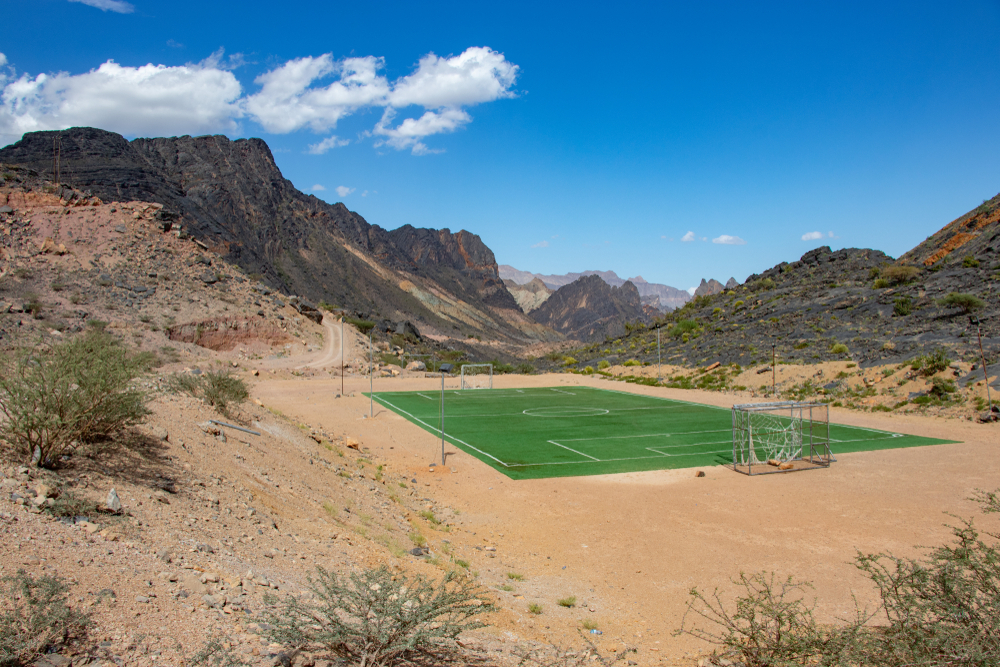
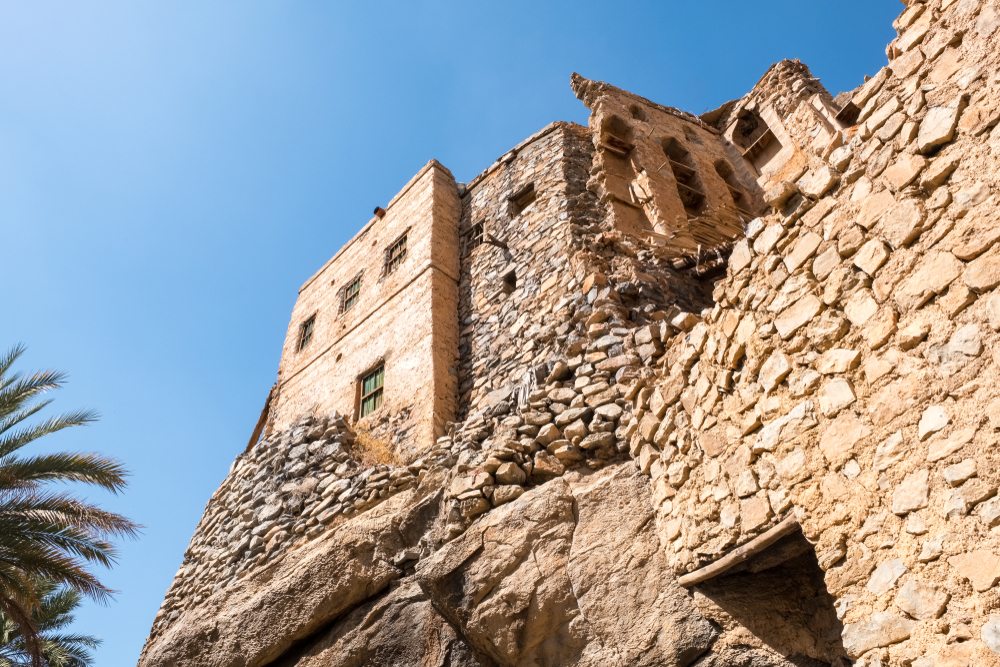
Later, as we pass by the village of Bilad Sayt, amid the stark brown mountains, there is, unexpectedly, a rectangular patch of emerald green grass—it’s a football field. Ahmed says the field was created by German car makers Audi for an advertisement they wanted to shoot, about a small boy who loves playing football, the country’s national sport, and wants to be the ‘Messi of Arabia’. The field is now maintained by the local residents. The Al-Hajar Mountains are home to ancient villages such as Misfat Al Abriyeen and Al Hamra, With their agricultural terraces, beautiful alleys, and homes built atop solid rocks. Located 3,280feet above sea level, the villages have traditional mud dwellings with palm-frond roofs and tiny holes for windows. Some of these old villages, which had no electricity or water supply, were eventually abandoned and the residents moved to newer towns for a more comfortable life. In recent years, Misfat Al Abriyeen has been preserved as a tourist destination. The village is noiseless— except for a bleating goat—and a few construction workers restoring the crumbling residences.
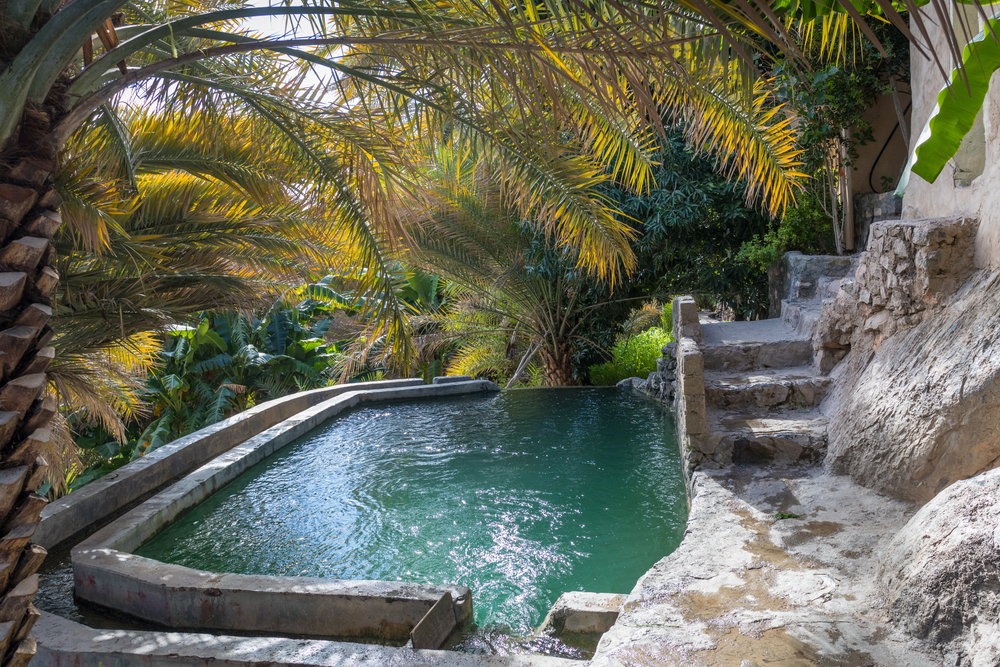
Bright red pomegranate flowers and tiny fruits peep over the high walls of a home, with a notice—“Do not pluck fruits or vegetables… It is our livelihood”—hung below. Orchards of citrus fruits, banana, pomegranate, papaya and dates flourish on the terrace farmlands, thriving on the ancient irrigation system of ‘falaj’ that brings water from mountain springs through channels carved into the rocks. At the foot of Jebel Shams is the Al Hoota Cave that is believed to be over 2 million years old, and which can be reached by narrow gauge airconditioned train. The naturally formed limestone cave was discovered in 1960 when a Bedouin is said to have gone looking for his lost goat, which had fallen into the cave through a small opening. Inside are stalactites and stalagmites that go back millions of years, and a rich ecosystem
comprising rare blindfish, bats, arthropods, molluscs, spiders, snails and water beetles.
– IMAM BIL’ARAB BIN SULTAN
Oman, as a seafaring nation, was a passageway for some of the earliest migrants and a favoured land for settlers for hundreds of years. When Ibn Battuta, the famous Moroccan travel scholar of the 14th century, visited Nizwa, about 140 km from Muscat, he described it thus: “Nizwa is enveloped by orchards and streams, and with fine bazaars and splendid clean mosques.” Nizwa was the capital of Oman in the 6th and 7th centuries and is known for being one of the early cities to convert to Islam. For centuries, it was a seat of conservative Islamic scholarship, especially after the Imams of Oman decided to base themselves here in 792 AD, and flourished as a centre of education, trade, culture and arts.
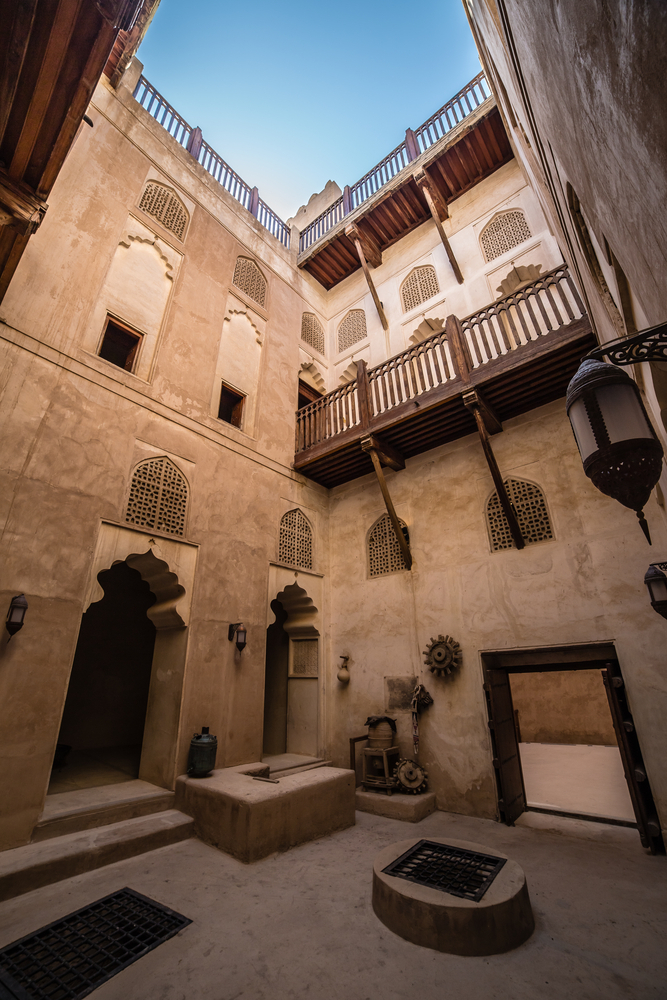
The city is known for its impressive 17th century Jabreen Castle that was built by Imam Bil’arab bin Sultan of the Yaruba dynasty and became Oman’s centre of power under his reign. As trade flourished, peace and prosperity reigned over the land and the wealth was used to build stunning monuments, such as the forts in Nizwa, Bahla and Nakhal, and the Hazm Castle in Al Rustaq. Since it was built during peaceful times, Jabreen Castle has open spaces, courtyards and even a school on the rooftop; although without any fortifications, it has plenty of defensive elements, such as secret passageways, observation windows, and watch towers. The castle safeguarded caravan routes, and had commanding views over the surrounding plains, making a surprise attack impossible.
The Sun and Moon Hall, where the Imam received important guests, is unique, with 14 windows placed in two rows—seven windows facing the sun and the other seven, the moon— to enable light to enter the room at all times. They were constructed on the principles of wind towers— vertical shafts that draw the wind into rooms— that are followed throughout the Middle East for air-conditioning. The Imam’s love for the arts is reflected in the staircase that leads to his rooms and suites, with its walls and ceiling decorated with paintings, motifs and rich calligraphy. Jabreen Castle was attacked and the Imam overthrown in 1692 by his brother Said bin Sultan.
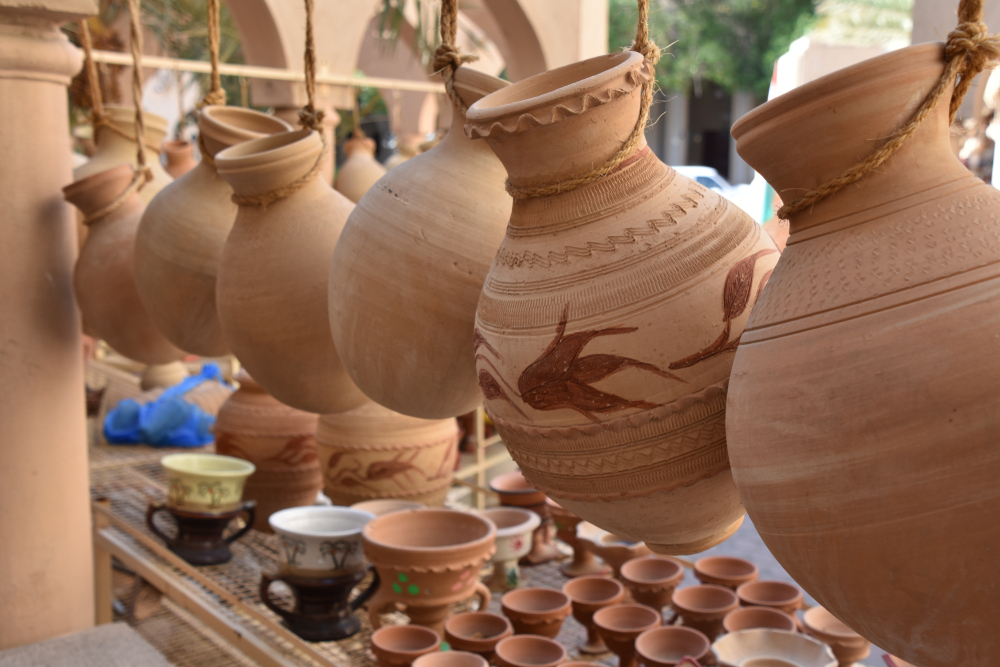
Although the Imam is long gone, the medieval heritage of the country lives on in today’s bustling marketplaces, such as the country’s oldest Nizwa Souq. The fragrance of frankincense fills its air, while rustic wooden chests, antique silverware, and weaponry make it look like a scene straight from the Arabian Nights
( *The writer travelled to Oman on the invitation of the Oman Tourism Board )