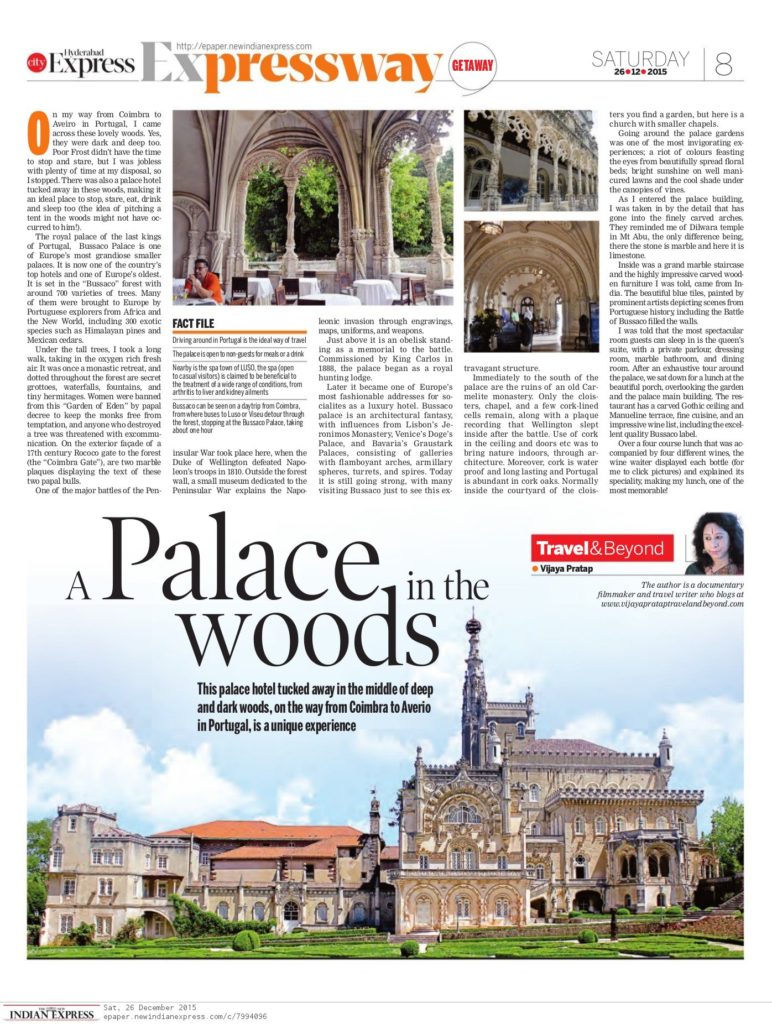
HYDERABAD : On my way from Coimbra to Aveiro in Portugal, I came across these lovely woods. Yes, they were dark and deep too. Poor Frost didn’t have the time to stop and stare, but I was jobless with plenty of time at my disposal, so I stopped. There was also a palace hotel tucked away in these woods, making it an ideal place to stop, stare, eat, drink and sleep too (the idea of pitching a tent in the woods might not have occurred to him!).
This palace hotel tucked away in the middle of deep and dark woods, on the way from Coimbra to Averio in Portugal, is a unique experience
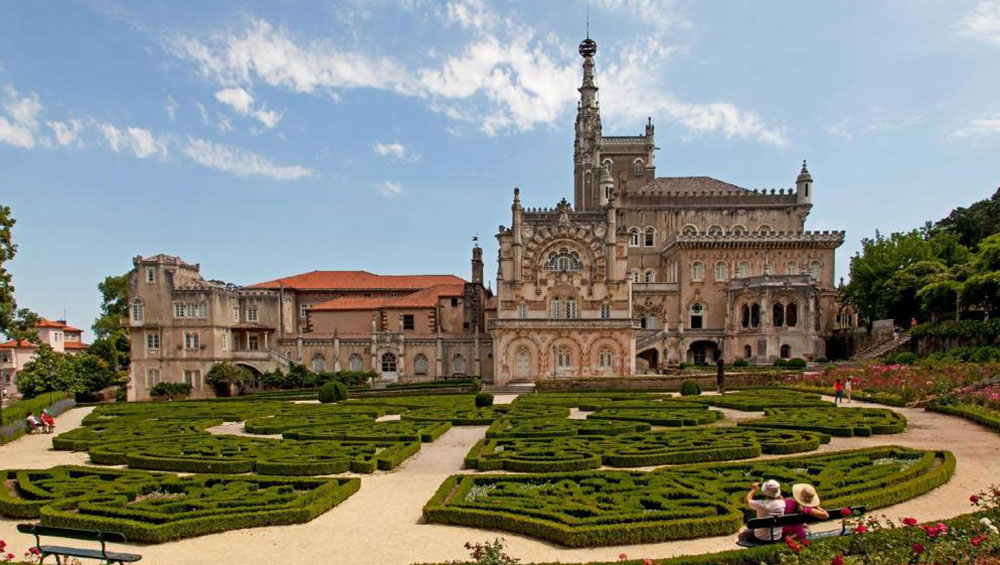
The royal palace of the last kings of Portugal, Bussaco Palace is one of Europe’s most grandiose smaller palaces. It is now one of the country’s top hotels and one of Europe’s oldest. It is set in the “Bussaco” forest with around 700 varieties of trees. Many of them were brought to Europe by Portuguese explorers from Africa and the New World, including 300 exotic species such as Himalayan pines and Mexican cedars.
Under the tall trees, I took a long walk, taking in the oxygen rich fresh air. It was once a monastic retreat, and dotted throughout the forest are secret grottoes, waterfalls, fountains, and tiny hermitages. Women were banned from this “Garden of Eden” by papal decree to keep the monks free from temptation, and anyone who destroyed a tree was threatened with excommunication. On the exterior façade of a 17th century Rococo gate to the forest (the “Coimbra Gate”), are two marble plaques displaying the text of these two papal bulls.
One of the major battles of the Peninsular War took place here, when the Duke of Wellington defeated Napoleon’s troops in 1810. Outside the forest wall, a small museum dedicated to the Peninsular War explains the Napoleonic invasion through engravings, maps, uniforms, and weapons.
Just above it is an obelisk standing as a memorial to the battle. Commissioned by King Carlos in 1888, the palace began as a royal hunting lodge.
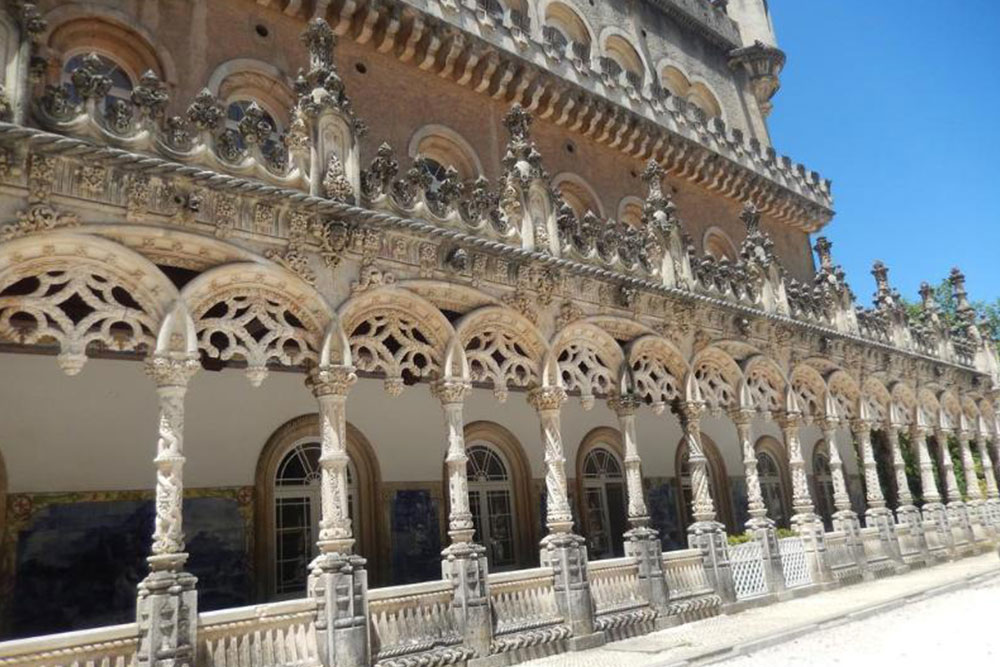
Later it became one of Europe’s most fashionable addresses for socialites as a luxury hotel. Bussaco palace is an architectural fantasy, with influences from Lisbon’s Jeronimos Monastery, Venice’s Doge’s Palace, and Bavaria’s Graustark Palaces, consisting of galleries with flamboyant arches, armillary spheres, turrets, and spires. Today it is still going strong, with many visiting Bussaco just to see this extravagant structure.
Immediately to the south of the palace are the ruins of an old Carmelite monastery. Only the cloisters, chapel, and a few cork-lined cells remain, along with a plaque recording that Wellington slept inside after the battle. Use of cork in the ceiling and doors etc was to bring nature indoors, through architecture. Moreover, cork is water proof and long lasting and Portugal is abundant in cork oaks. Normally inside the courtyard of the cloisters you find a garden, but here is a church with smaller chapels.
Going around the palace gardens was one of the most invigorating experiences; a riot of colours feasting the eyes from beautifully spread floral beds; bright sunshine on well manicured lawns and the cool shade under the canopies of vines.
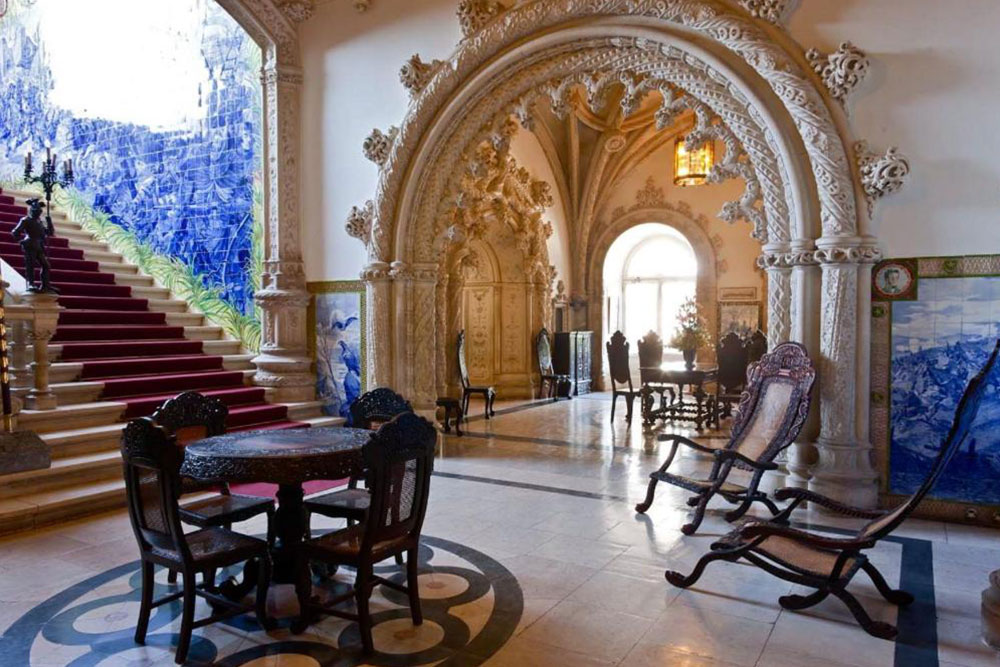
As I entered the palace building, I was taken in by the detail that has gone into the finely carved arches. They reminded me of Dilwara temple in Mt Abu, the only difference being, there the stone is marble and here it is limestone.
Inside was a grand marble staircase and the highly impressive carved wooden furniture I was told, came from India. The beautiful blue tiles, painted by prominent artists depicting scenes from Portuguese history, including the Battle of Bussaco filled the walls.
I was told that the most spectacular room guests can sleep in is the queen’s suite, with a private parlour, dressing room, marble bathroom, and dining room. After an exhaustive tour around the palace, we sat down for a lunch at the beautiful porch, overlooking the garden and the palace main building. The restaurant has a carved Gothic ceiling and Manueline terrace, fine cuisine, and an impressive wine list, including the excellent quality Bussaco label.
Over a four course lunch that was accompanied by four different wines, the wine waiter displayed each bottle (for me to click pictures) and explained its speciality, making my lunch, one of the most memorable!
Fact File
Driving around in Portugal is the ideal way of travel
The palace is open to non-guests for meals or a drink
Nearby is the spa town of LUSO, the spa (open to casual visitors) is claimed to be beneficial to the treatment of a wide range of conditions, from arthritis to liver and kidney ailments
Bussaco can be seen on a daytrip from Coimbra, from where buses to Luso or Viseu detour through the forest, stopping at the Bussaco Palace, taking about one hour
Vijaya Pratap is a freelance journalist and a documentary filmmaker, based in Hyderabad. She specialises in the study of art, culture, history and wildlife.
Meet the Author – Vijayapratap