For two and a half hours, I was transported back to the 18th century Salzburg where Mozart ruled the music scene, entertaining and educating both the connoisseur and the dilettante with equal ease. Even after two and a half centuries, his music lives on, as Salzburg celebrates Mozart and his priceless music every day with the same love and passion.
My “Mozart Dinner Concert” in Salzburg was a journey back to the world of Mozart’s music, and the culinary delights of his times. It was one of those leisurely musical evenings when neither pressing engagements nor stressing targets existed, something that is unknown to some of us in the present times. The venue was the romantic Baroque Hall of St. Peter’s set amidst the ancient walls of St. Peter’s Abbey in Salzburg’s city centre. It is the oldest restaurant in Europe dating back 1200 years, and famous for its gourmet cuisine, music and wine. This ancient restaurant is said to have hosted some famous personalities from the world of art and culture.
The history of St. Peter Stiftskulinarium – a Charlemagne-era monastery in Austria is quite interesting. It is considered the oldest in Europe as it was founded in 803 by one of Charlemagne’s scholar liegemen (vassals who owed feudal service or allegiance to noblemen). In those days, it was a tradition to serve food free of cost to religious travellers who were passing through, who in turn helped the monastery as long as they stayed there. Later, when the times changed, by 1720, patrons included nobility, clergy and the emerging middle classes. The Stiftskeller’s padres were allowed to serve their own wines but by 1803 the Stiftskeller acquired the right to brew and serve beer. In 1903 the grand Baroque Hall was constructed and in 1996 the famous ‘Mozart Dinner Concerts’ premiered and became incredibly popular ever since. In 2003 The St.Peter Stiftskeller celebrated its 1200thanniversary. Today it is a “must-do” for Mozart fans visiting his hometown.
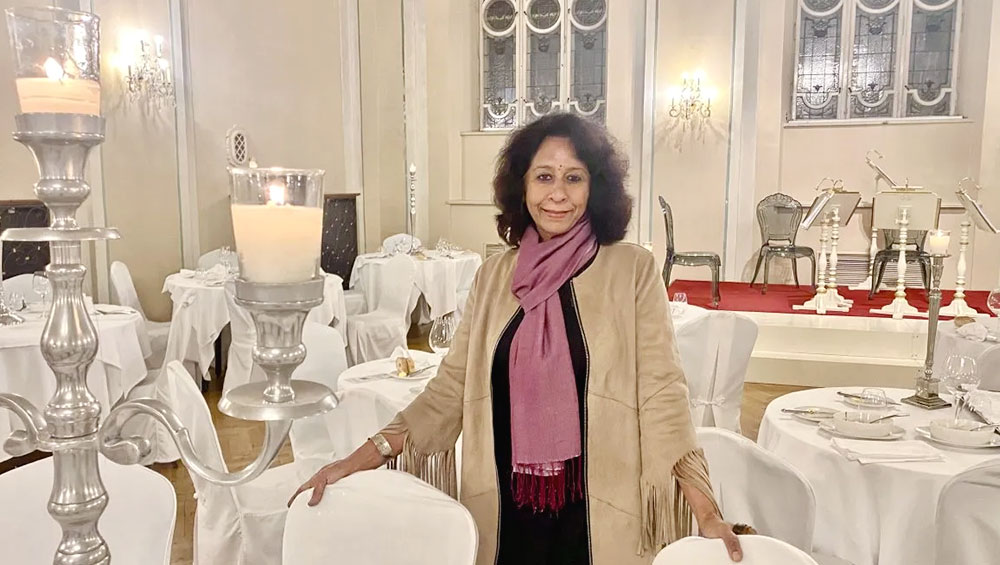
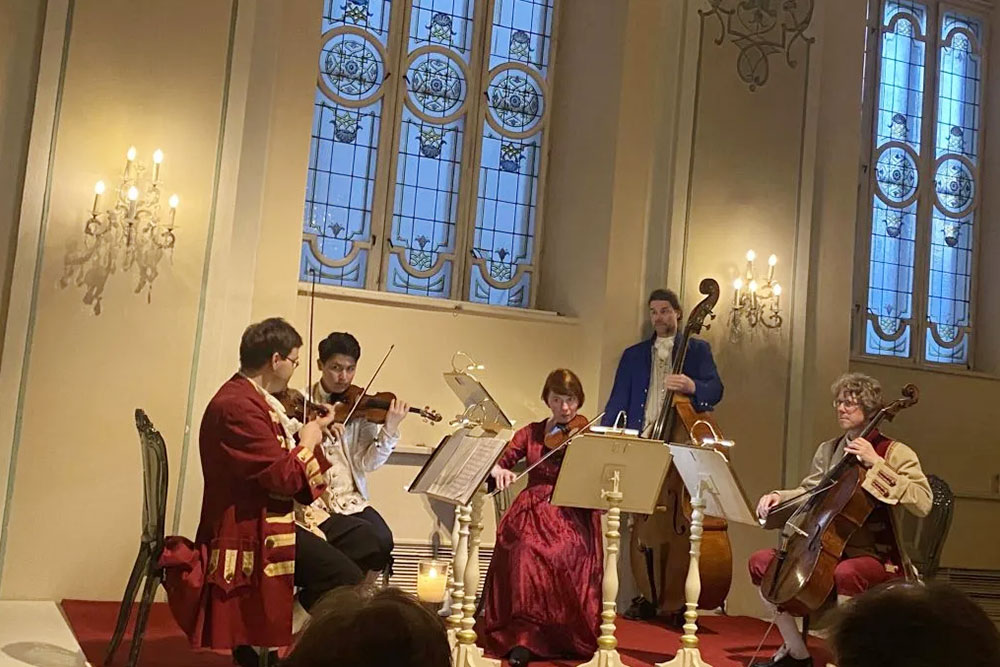
As I entered, bathed in candlelight, the baroque hall looked like a fairy tale setting. With the steward addressing me as “My Lady!” in soft tones, I felt like an aristocrat and started experiencing an evening as it could have been in 1790. The tall candelabras on my table holding pale pink candles looked too romantic and dreamy. Members of the Amadeus Consort Salzburg, consisting of two opera singers and five instrumentalists adorned the stage. Their period costumes added a dramatic element to the classy vintage setting. I came to know that most of these musicians are graduates of the world-renowned Mozarteum University in Salzburg. I looked at the elegant menu card: the menu was based on historical recipes, the way they were prepared and served in the 18th century Salzburg and now authentically reinterpreted in the style of St. Peter Stiftskulinarium. It is said that the composer himself made numerous references to culinary delights in his operas and letters to other people: the reason why the special dinner concert menu is prepared based on 18th-century recipes. According to historians, the Mozart family often met here for dinner, as confided by the composer’s sister Nannerl in her diary.
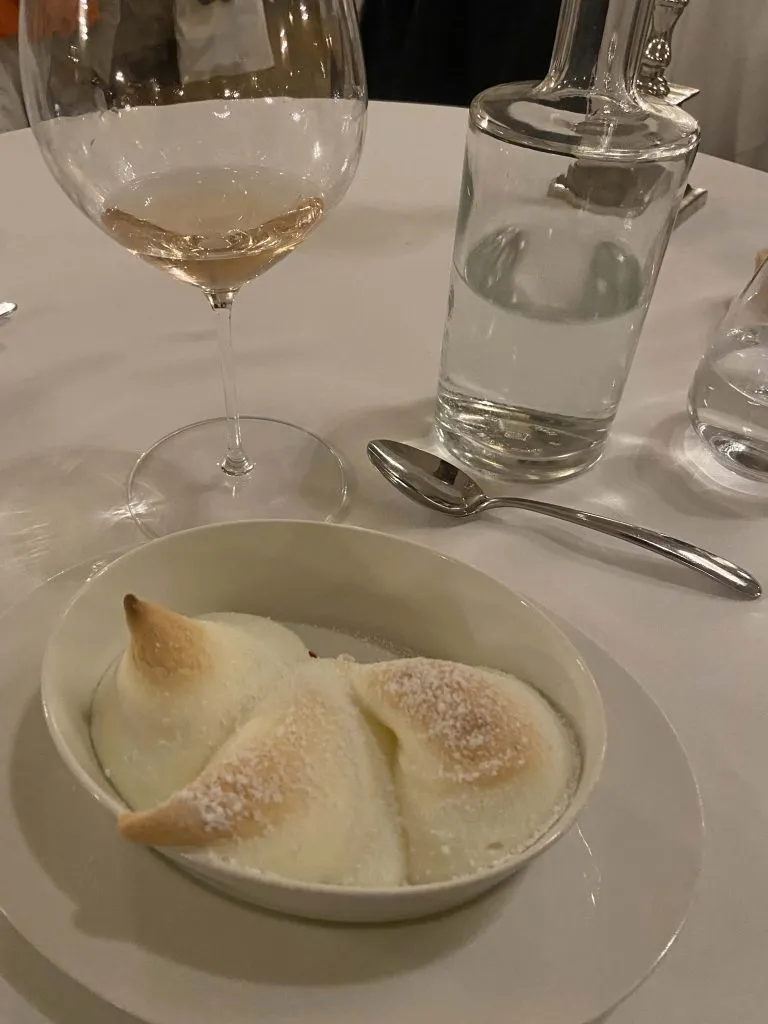
As the musicians presented each piece, it was followed by each course that was served during the intermissions. The humble, traditional dark bread (Schwarzbrot) baked in the St Peter’s kitchen and served with local butter was present on the table throughout. The three-course menu started with a clear lemon chicken soup with curd cheese and rosemary dumplings: the dumplings and curd cheese certainly added substance to the clear soup. Then there was Supreme of corn-fed chicken on the glaze of red wine and herbs with creamy white polenta and vegetables from Padre Prior’s garden: the chicken is stuffed with quark (a soft, unripened cheese) and herbs and served on a glaze of red wine. For dessert, we were served SalzburgerNockerl- a local favourite that often appears as a finale to sumptuous dinners. For drinks, I chose a rosé from St Peter cellar’s impressive wine list that went well with the classy ambience and the classical music.
Arias and duets from three of Mozart’s famous operas – ‘Don Giovanni’, ‘The Magic Flute’ and ‘The Marriage of Figaro’ were performed before and between courses creating a rich musical experience. In addition, there was a charming interpretation of the first movement of the popular serenade ‘A Little Night Music’. During one of the intervals, I met a female opera singer who hailed from Ankara. We exchanged notes on the rich opera scene in Ankara where I attended some of the finest performances by the best of Turkish opera singers.
Appealing to all the senses, the dinner concert was a perfect blend of visual, aural and gastronomic experiences. It was an interesting jugglery of times: meeting in the past and indulging in the present, while fully immersing in Mozart’s world.
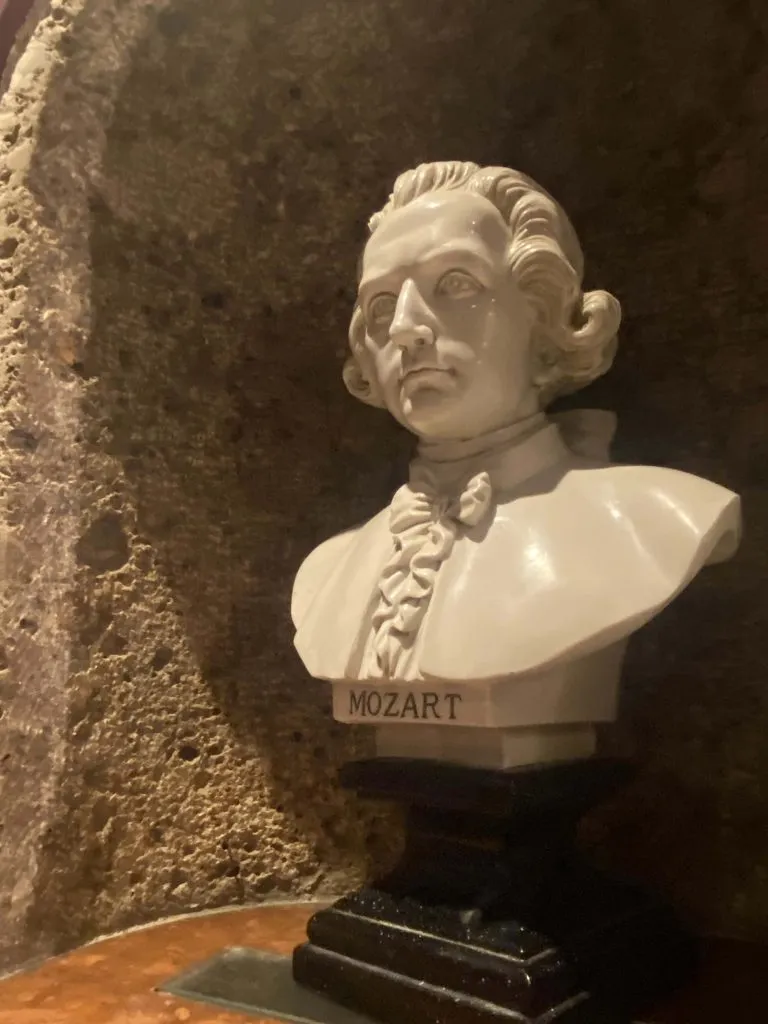
As I left the baroque hall after the concert with the melodious notes still ringing in my ears, I noticed the marble bust of Mozart in the hallwayhad a faint smile on his lips!Salzburg’s best-loved son certainly looked pleased that his music continues to becelebrated. – Vijaya Pratap
Mozart Museums
No visitor to Salzburg ever wants to miss an opportunity to see Mozart memorabilia and I am no exception. We walk up to house No 9, Getreidegasse where Mozart was born in 1756: he was the seventh child of Leopold Mozart who was a musician of the Salzburg Royal Chamber. It is now a museum depicting the early life of Mozart, his first musical instruments, etc. The third floor exhibits Mozart’s childhood violin, and harpsichord, as well as portraits, documents, family letters and early editions of his music, and the second floor is devoted to Mozart’s passionate interest in opera and includes the clavichord on which he composed “The Magic Flute”. The first floor replicates the living conditions in Mozart’s day with period furniture. Original documents and paintings illustrate his life in Salzburg.
Then we move to another Mozart museum close by, called ‘Mozart Residence’ where the family lived from 1773 to 1780 in the dance master’s house. Exhibits relating to the life of the Mozart family are displayed here along with the history of the building. In Alter Markt, we visit Café Tomaselli, whose origins can be traced back to the 1700s. This is where Mozart used to frequent and have his favourite almond milk. We stop briefly to have coffee and Tomaselli’s famous cakes.
Baroque Beauties
The Domquartier includes the baroque Residence, where art by Rembrandt and Rubens are displayed and the domed Salzburg Cathedral. With a 1,300-year-old history and imposing architecture, the Salzburg Cathedral boasts seven organs that provide a profoundly moving musical experience. At the entrance three heavy bronze doors illustrate the divine virtues – faith, hope and love. The bronze baptismal font, the oldest object in the cathedral is where Mozart was baptised. The high dome of 64 metres creates an impressive play of light in the morning light. Artwork at the high altar and the rich stuccowork are particularly noteworthy.
The nearby St Peter’s Cathedral displays a blend of architectural styles inside the abbey church; the basilica’s three aisles reflect its Romanesque architecture but it is the ornate Rococo decoration of the 1770s that dominates. Some of the art treasures in the church include altar paintings, the ‘Salzburg Madonna’ from the early 15th century the ‘Flight into Egypt’ and the ‘Massacre of the Innocents’.
I am quite thrilled to see the famous St. Peter’s Cemetery on the grounds of the Abbey, the scene when Nazis were searching for the von Trapps and the family was hiding behind the tombstones: soon Ilse disenchants me by saying that it was rebuilt in the Hollywood studios for the shoot! Next to the Abbey is the legendary St. Peter Stiftskeller, founded a thousand years ago by the abbey’s monks. It serves traditional Austrian food and hosts Mozart Dinner Concerts- my tickets are already booked for that evening.
Centuries Of Baking Tradition
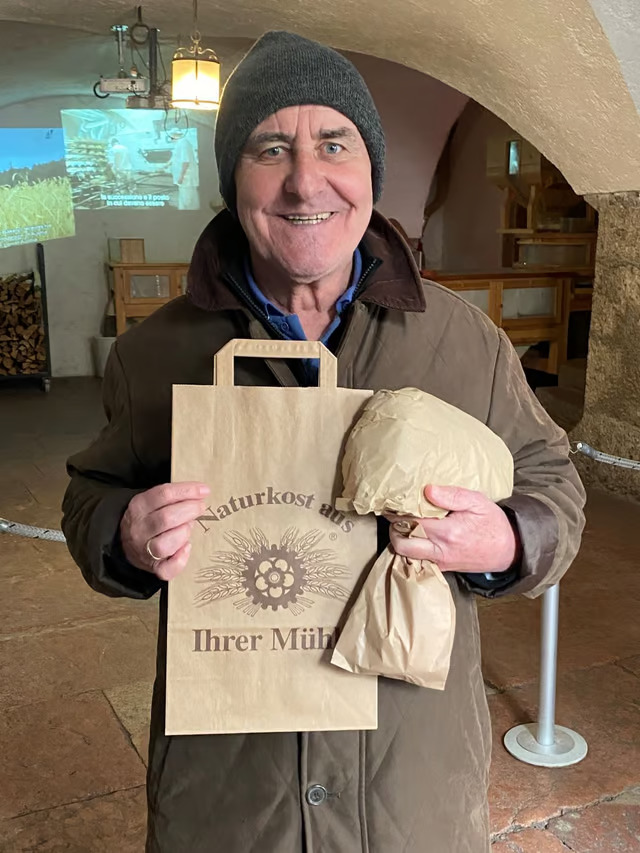
Our next stop: Salzburg’s oldest bakery right next to the mystical St Peter’s cemetery that dates back to the 12th century. At that time, a tunnel for the Almkanal was cut through the Mönchsberg to supply the city with water. Directly at the exit of the canal from the mountain, the monastery built a grain mill and also the bakery that is still appreciated today as St Peter’s Abbey Bakery. With its historic vaults, the Abbey Bakery presents itself as a relic from times long past. I am told the extremely popular wood-fired bread made from pure natural sourdough is still baked in the original wood-fired oven. The bread keeps well and pairs equally well with butter and jam as it does with cheese and ham. Other classics of the traditional bakery are mini brioches and Vintschgerl [aromatic rye and wheat bread from South Tyrol]. I see an old man with freshly baked bread loaves and he willingly poses for me with an adorable beaming smile. The mill wheel at the Almkanal was rebuilt according to old models making the bakery’s setting charmingly medieval: no wonder it is a distinctive landmark in Salzburg!
Through a steep path, riding in the oldest funicular in Austria (built in 1892) we reach Hohensalzburg Fortress: Central Europe’s largest, completely preserved fortress dating from the 11th century. It houses the royal apartments and museums. The spectacular view from the top captures the whole beauty of Salzburg in one frame with the majestic Alps in the backdrop. I can hear coming from yonder, the echoing strains of “The hills are alive with the sound of music…” Is that Maria singing?
Vijaya Pratap is a freelance journalist and a documentary filmmaker, based in Hyderabad. She specialises in the study of art, culture and wildlife.
Meet the Author – Vijayapratap