

“The memory of a cup of coffee lasts for 40 years,” says Mustafa with a disarming smile, handing me a cup of frothy Turkish coffee. I have a tough time overcoming a strong urge to add milk to the coffee. He smiles,
saying, “Get used to this. You may even get addicted to it!” The first sip hits me with its strong taste but by the end of the small cup, I start enjoying the deliciousness of this centuries-old tradition!
The coffee
According to one of the many lores associated with the beverage, coffee was discovered in Ethiopia as a “magic fruit,” reached the land of the Ottomans through Yemen in the 16th century, and was introduced to Sultan Suleiman I. It is believed that the sultan loved Arabic coffee so much that his harem members were taught to brew it. Coffee soon assumed its place as a prestigious beverage in the palace and wealthy households. By the mid-1550s, Turkish coffee was no longer restricted to the upper classes and became a common delight in all households. Then, by the mid17th century, it became an essential part of the Ottoman court’s ceremonies, with the Sultan being served only by his private coffee brewers. Over time, coffee not only generated its rituals and ceremonies but also played an instrumental role in the development of social life. A symbol of hospitality, friendship, elegance and entertainment, coffee is now quintessential to Turkish culture.
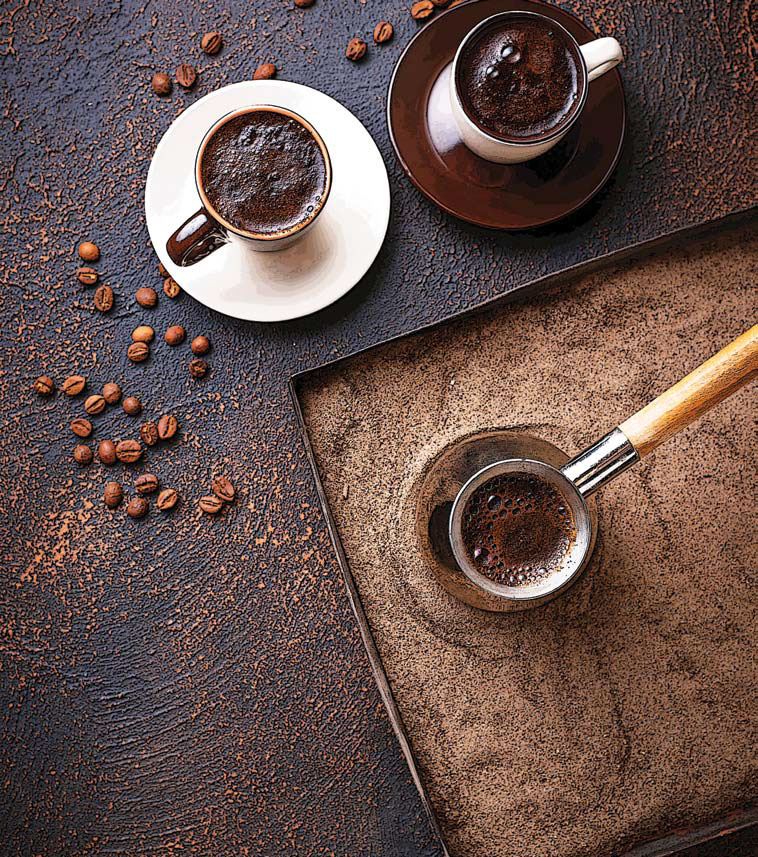
In Turkey, coffee is not just a beverage. It’s a tradition, a part of the social history and an art-form.
– Vijaya Pratap
The cups
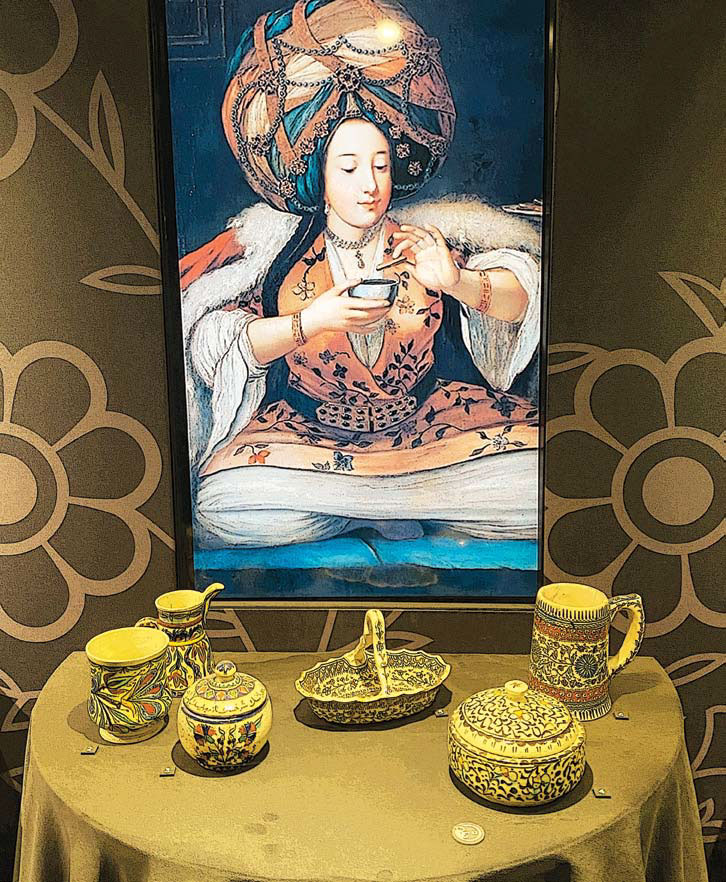
Following the arrival of coffee in Europe in the 17th century, coffee trade and production attained a new level; intense transactions ensued among Eastern merchants, who were increasingly interested in coffee. During this period, Dutch and British merchants also joined the market and began importing coffee, thus generating large volumes of coffee exported to Europe from the East. This concentrated activity was reflected by coffee cup production, as the Chinese cups and later, the Meissen and Sèvres porcelains assumed their places in the palace and wealthy households. Soon Kütahya, a Turkish city famous for its attractive glazed pottery and tiles, started to produce replicas that became increasingly popular. The traditional techniques used in preparing coffee led to the development of such special tools and silverware as the boiling pot (cezve), coffee cups (fincan) and mortars, all of which looked artistic.

Made with the freshest beans, Turkish coffee is smoother, more aromatic, foamy/ frothy and concentrated with a longlasting taste. The strong, intense flavour comes from its boiling and the distinct texture from unfiltered coffee beans. Since Turkish coffee is much denser than filtered coffee, it is not customary to drink more than one cup. When brewed with spices like cardamom and clove, the aroma is rather nutty and spicy.
The traditions
Traditionally, Turkish coffee is brewed by using a sand-filled pan (for better control of heat) that’s heated over an open flame. The brewing happens in a copper pot called a cezve. After fine coffee grinds and water are added to the pot, the cezve is placed and rubbed in the hot sand. This movement creates heat and foam emerges at the top. Cups left on the surface stay warm and the depth of the coffee in the sand can adjust the heat used for brewing. It is served in small cups with a very thin handle. The thin handle and the thick foam keep the brew warm longer. The brewing continues in the cup due to the unfiltered coffee grounds.
Turkish coffee is always served with water for the guests to first cleanse their tongues then taste the coffee and later use water to rinse off the coffee residues from their mouths. Out of respect, Turkish coffee is generally served to the eldest guest first. As a part of the traditional Turkish wedding custom, when the groom visits the bride-to-be’s house along with his elders to ask for her hand and seek their blessings, the girl must prepare and serve Turkish coffee to the guests. This is when the bride-tobe uses salt instead of sugar to gauge his character. If the bridegroom drinks his coffee without any sign of displeasure, the bride-to-be assumes that the groom is good-tempered and patient. Etiquette demands the groom to accept this playful gift with a smile!
Art of Coffee Pottery
Kütahya ceramic production, embellished with floral motifs and abstract figures, largely contributed to the various routines, rituals and relationships centred around coffee. Used in the preparation, service, consumption and preservation of coffee, other elements like coffee mill, coffee skillet, coffee cooler, cezve and ewer (a jug/ pitcher) complement the coffee ceremony. You can see beautiful coffee pottery in different and unique designs at the Pera Museum in Istanbul.

Accompaniments
A plate of Turkish delight called lokum usually accompanies Turkish coffee. Visually appealing with high-calorie content, these sweet treats are a set of specialised culinary delights!
Fortunes in a cup
Reading fortunes in emptied coffee cups (tasseography) is predominantly a Turkish tradition due to the unfiltered coffee that leaves thick sediment behind, making intriguing patterns. The cup is turned over into the saucer to cool and the patterns of the coffee grounds are interpreted. It is said that when they were bored, the members of the Ottoman harem used to drink coffee and tell each other fortunes to chat and gossip.
Vijaya Pratap is a freelance journalist and a documentary filmmaker, based in Hyderabad. She specialises in the study of art, culture and wildlife.
Meet the author – Vijaya Pratap