
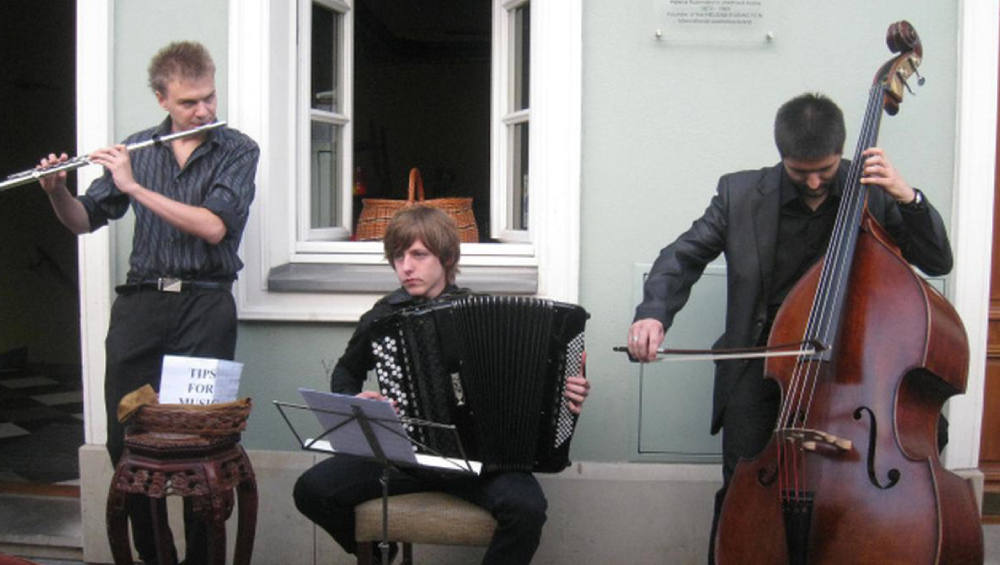
Street Musicians in Kazimierz. Photo: Vijaya Pratap
History and beauty come together in this former capital of Poland.
Krakow, the former capital of Poland and the cradle of Polish culture, endured two world wars, seen enough pain to crumble, yet, came out unscathed. Krakow is ancient, historic, elegant, unique and lovable. If you cannot spend much time here, these are the “must sees”, to get the best out of the visit.
Main market square
Surrounded by centuries old town houses and palaces, it is one of the largest medieval squares in Europe. Admire the facades, portals, windows and roofs of these antique buildings with their excellently preserved and meticulously recreated interiors. Eat at the numerous cafes and restaurant gardens encircling the square. Romantic horse carriages transport you to a bygone era. Indulge in theall time favourite “people watching” or simply get entertained by the antics of buskers fooling around.
Kazimierz – Jewish District
After decades of ruin, Kazimierz came into lime light with Steven Spielberg’s Oscar winning “Schindler’s List”, which was shot here. Today it is a bustling, cheerful place, full of cafes and throbbing life.
Walk along its streets, amidst synagogues, exclusive hotels, restaurants, handicraft workshops of purses, bags, boots and leather engraving. Experience the old world charm of quaint Jewish eating places with lacy furnishings, wooden figurines and street musicians.
Schindler’s Factory Museum
German businessman Oskar Schindler saved the lives of 1,100 Jews, who worked athis enamelware factory in Krakow during World War II. The museum combines photographs and artifacts with interactive components, sound, set-piece reconstructions, film and photo projections, supported by a brilliant 35 minute film with English subtitles where former Schindler employees recount memories of those horrendous times. Peepinto cramped family quarters or the hideoutof underground resistance fighters.
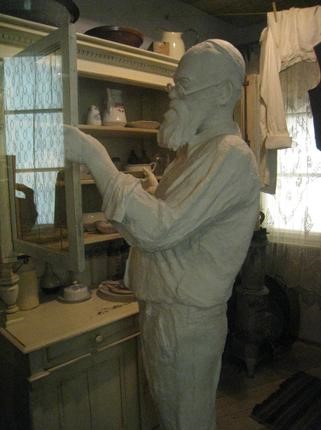
Wawel Castle and Cathedral
The interiors of the Castle feature must see exhibitions like the royal chambers, Flemish tapestries, Eastern art, war trophies, and archaeological discoveries testifying to the more than one thousand year presence of Christianity in Poland. A walk with in the castle walls is rewarded with impressive arcaded courtyards, and the cathedral, where Polish kings were crowned and buried.
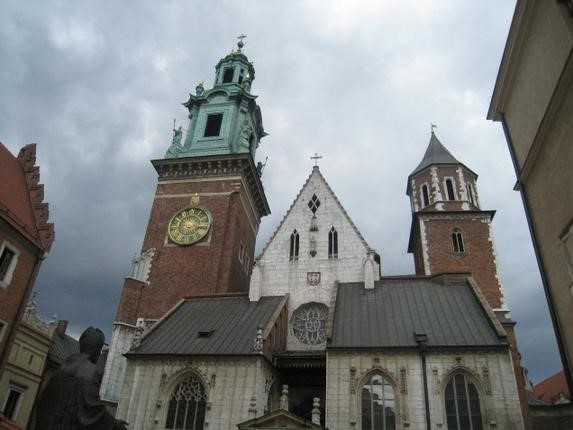
Wieliczka Salt Mine
Ten kilometres from Kraków, this UNESCO World Heritage Site amazes with its underground lakes, chambers, and wooden bridges. The underground town has a sanatorium, post office, cinema, restaurant, souvenir shop and concert halls. Operating since the 13th century, the mine is spread over nine levels and 300 km of tunnels, boasts dozens of statues, three chapels and an entire Cathedral carved out of rock salt by the miners.
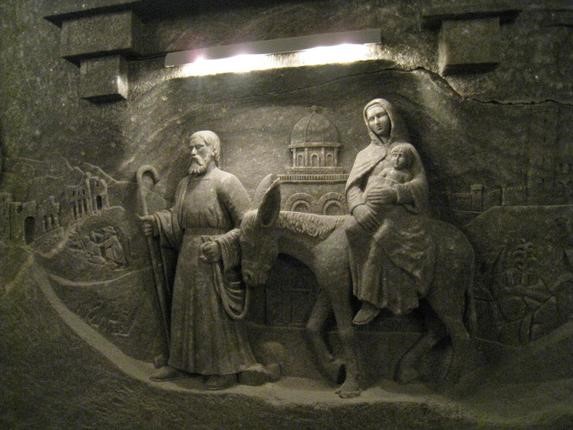
Must-see exhibits
Leonardo da Vinci’s original painting, “Lady with an Ermine” at Czartoryski Museum. Largest permanent exhibit of the 19th century Polish painting and sculpture at Sukiennice Museum. History of Kraków through the ages cleverly combined with modern technology at Rynek Underground Museum. “Jagiellonian”, considered the oldest existing globe, and the instruments of Nicolaus Copernicus at Collegium Maius.
The world of Historic Cellars
The cellars stretch under the tenement houses of the Old Town, forming an unusual gathering of Gothic corridors and vaulted rooms, which accommodate numerous restaurants, clubs, theatres and cabarets. The Main Market Square has over 100 such cellars where numerous concerts are held, usually jazz, as the city is called the capital of Polish Jazz.
Sukiennice Cloth Hall
A 14th century major centre of international trade where travelling merchants met and bartered. Later eras saw Sukiennice as the source of exotic imports from the East – spices, silk, leather and wax – while Kraków exported textiles, lead and salt. Amid grand history and great cultural value, this stunning Renaissance structure still pulsates today, selling souvenirs for tourists.
The Planty:
A unique park, designed in varied styles, adorned with numerous monuments and fountains, it was built on the site of the old moat that once surrounded the city’s former defensive walls. A favourite walking place for Krakovians, close to Florian Gate and Barbican- the sole remains of the city’s fortification system. Planty runs almost entirely along the Royal way the oldest and most well known tourist routes.
Local markets:
Stary Kleparz is an 800-year-old tradition, a large, covered, open-air market place north of the Barbican. The best place for local produce, fruit, meat, cheeses, spices, at bargain prices. Mingle with local shoppers and ‘feel’ the place. Plac Nowy is a historic Jewish market in the pre-war days, with its rotunda serving as a kosher slaughterhouse.
Plac Nowy Jewish Market:
A historic Jewish market in the pre-war days, with its rotunda serving as a kosher slaughterhouse, presently butcher shops still exist inside, while fast food windows line the exterior. In the evenings, Plac Nowy turns into one of the best drinking destinations in town.
Fact File
Travel: Daily flights to Krakow from major Indian cities. Shen- gen visa like other European countries
Explore: Music Clubs/ Night Spots with a flourishing nightlife, as this is a city of over 2,00,000 students.
Eat: Pierogi- Dumplings with varied stuffings like fruit, cabbage, mushrooms, meat, buck wheat or cheese, smoked cheese, Wadowice cream cakes and don%E2%80%99t miss flavoured vod- kas!
Getting there: There are daily flights to Krakow from major Indian cities. Schengen visa like other European countries.
Stay: Excellent Boutique Ho- tels, close to the Main Market Square (Pod Roza, Unicus, Stary, etc)
Getting around: Best option is walking. Take the bus for longer distances.
Keywords: Kraków, Poland tourism, Kazimierz, Wieliczka Salt Mine, Sukiennice Cloth Hall, Schindler’s Museum
Vijaya Pratap is a freelance journalist and a documentary filmmaker, based in Hyderabad. She specialises in the study of art, culture and wildlife.
Meet the author – Vijaya Pratap